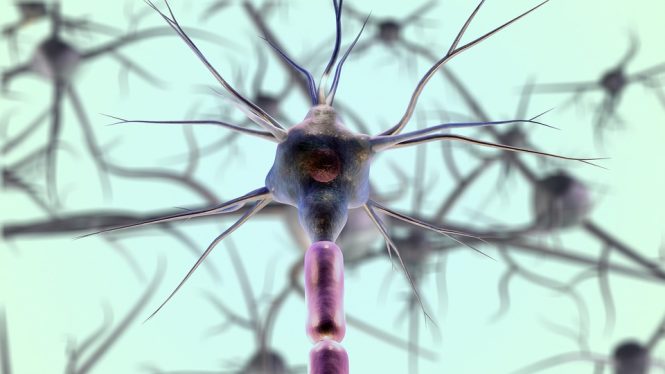
Quantum Neural Networks: The Next Frontier in AI Research
The field of artificial intelligence (AI) has made tremendous progress in recent years, with advancements in machine learning and deep learning enabling applications such as image recognition, natural language processing, and autonomous vehicles. However, as AI systems become increasingly complex, they are facing significant challenges in terms of computational power, memory, and scalability. To overcome these limitations, researchers are turning to a new and exciting area of research: Quantum Neural Networks (QNNs).
What are Quantum Neural Networks?
Quantum Neural Networks are a type of neural network that leverages the principles of quantum mechanics to perform computations. Unlike classical neural networks, which rely on bits (0s and 1s) to process information, QNNs use quantum bits or qubits, which can exist in multiple states simultaneously. This property, known as superposition, allows QNNs to process vast amounts of information in parallel, making them potentially much faster and more efficient than classical neural networks.
How do Quantum Neural Networks Work?
QNNs are based on the concept of quantum computing, which uses quantum-mechanical phenomena such as superposition, entanglement, and interference to perform calculations. In a QNN, qubits are used to represent the weights and biases of the neural network, and quantum gates are used to perform operations on these qubits. The quantum gates are the quantum equivalent of the activation functions used in classical neural networks, and they allow the QNN to learn and adapt to new data.
Advantages of Quantum Neural Networks
QNNs have several potential advantages over classical neural networks:
- Exponential Speedup: QNNs can solve certain problems much faster than classical neural networks, thanks to the power of quantum parallelism.
- Improved Scalability: QNNs can handle much larger datasets and more complex problems than classical neural networks, making them ideal for applications such as image and speech recognition.
- Enhanced Robustness: QNNs are less prone to overfitting and can generalize better to new data, thanks to the noise-reducing properties of quantum mechanics.
- New Applications: QNNs can be used to solve problems that are currently intractable with classical neural networks, such as simulating complex quantum systems and optimizing complex functions.
Challenges and Limitations
While QNNs hold great promise, there are several challenges and limitations that need to be addressed:
- Quantum Noise: QNNs are prone to quantum noise, which can cause errors and instability in the computation.
- Quantum Control: Maintaining control over the quantum states of the qubits is a significant challenge, requiring advanced quantum error correction techniques.
- Scalability: Currently, QNNs are limited to small-scale implementations, and scaling up to larger systems is a significant challenge.
- Quantum-Classical Interoperability: Seamlessly integrating QNNs with classical systems and algorithms is a major challenge.
Current Research and Applications
Researchers are actively exploring various aspects of QNNs, including:
- Quantum Circuit Learning: Developing techniques to learn quantum circuits that can be used to implement QNNs.
- Quantum Error Correction: Developing methods to mitigate the effects of quantum noise and error in QNNs.
- Quantum-Classical Hybrid Models: Developing models that combine the strengths of classical and quantum computing.
- Applications in Machine Learning: Exploring the use of QNNs in machine learning tasks such as image recognition, natural language processing, and reinforcement learning.
Conclusion
Quantum Neural Networks represent a new and exciting frontier in AI research, with the potential to revolutionize the field of machine learning and beyond. While significant challenges need to be addressed, the potential benefits of QNNs, including exponential speedup, improved scalability, and enhanced robustness, make them an attractive area of research. As researchers continue to explore and develop QNNs, we can expect to see significant advancements in the field of AI and the emergence of new applications that were previously unimaginable.