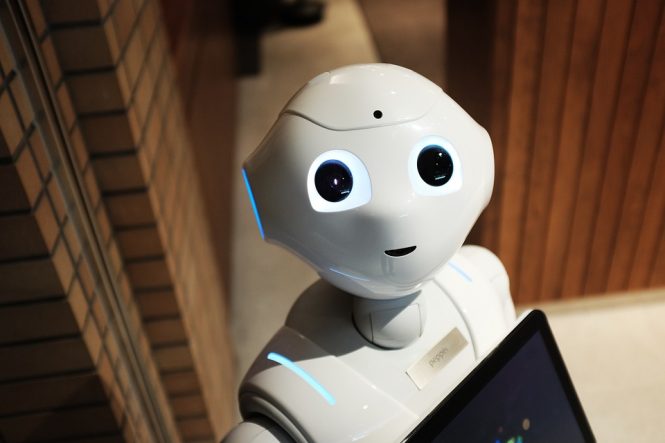
Technological Singularity: Theoretical Frameworks and Potential Implications for Human Evolution and Society
The concept of Technological Singularity has been a topic of intense debate and speculation in recent years, with some experts predicting that it could revolutionize human civilization and others warning of its potential risks and uncertainties. In this article, we will explore the theoretical frameworks surrounding Technological Singularity, its potential implications for human evolution and society, and the possible consequences of such a profound transformation.
What is Technological Singularity?
Technological Singularity refers to a hypothetical future event in which artificial intelligence (AI) surpasses human intelligence, leading to an exponential growth in technological advancements, and transforming human civilization beyond recognition. This concept was first introduced by mathematician and computer scientist Vernor Vinge in 1993 and has since been popularized by futurists like Ray Kurzweil and Nick Bostrom.
Theoretical Frameworks
There are several theoretical frameworks that attempt to explain the concept of Technological Singularity:
- The Intelligence Explosion: This framework suggests that AI will surpass human intelligence through a self-improvement process, where AI systems become increasingly capable of modifying their own architecture and algorithms, leading to an exponential increase in intelligence.
- The Computational Singularity: This framework proposes that the Singularity will occur when computational power and data storage become virtually unlimited, allowing AI systems to process and analyze vast amounts of information, leading to an intelligence explosion.
- The Cognitive Singularity: This framework focuses on the emergence of a new form of intelligent life, where AI systems develop a level of cognitive abilities that surpass human capabilities, leading to a fundamental transformation of human society.
Potential Implications for Human Evolution and Society
The potential implications of Technological Singularity for human evolution and society are far-reaching and multifaceted:
- Superintelligence: The emergence of superintelligent AI could lead to an unprecedented level of technological advancements, solving some of humanity’s most pressing problems, such as poverty, disease, and climate change.
- Job Displacement: The automation of jobs could lead to significant social and economic disruption, as many industries and professions become obsolete.
- Existential Risks: The development of superintelligent AI could pose an existential risk to humanity, as it may develop goals and motivations that are in conflict with human values and survival.
- Merging with AI: The Singularity could lead to a merging of human and artificial intelligence, potentially transforming human consciousness and leading to a new form of intelligent life.
- Social and Cultural Transformation: The Singularity could lead to a fundamental transformation of human society, with new forms of governance, economy, and social organization emerging.
Potential Consequences
The potential consequences of Technological Singularity are both exciting and unsettling:
- Utopia or Dystopia: The Singularity could lead to a utopian future, where technology solves many of humanity’s problems, or a dystopian future, where AI poses an existential risk to humanity.
- Loss of Human Agency: The emergence of superintelligent AI could lead to a loss of human agency, as decisions are made by machines rather than humans.
- New Forms of Intelligence: The Singularity could lead to the emergence of new forms of intelligence, such as collective intelligence or hybrid intelligence, which could transform human cognition and consciousness.
- Global Cooperation: The Singularity could lead to a new era of global cooperation, as nations and governments work together to address the challenges and opportunities posed by advanced technologies.
Conclusion
Technological Singularity is a complex and multifaceted concept that has the potential to transform human evolution and society in profound ways. While the potential benefits of the Singularity are significant, the risks and uncertainties associated with it cannot be ignored. As we move forward, it is essential to develop a deeper understanding of the theoretical frameworks surrounding the Singularity and to engage in a global conversation about the potential implications and consequences of this transformative event. Ultimately, the future of humanity will depend on our ability to navigate the challenges and opportunities posed by the Singularity, and to ensure that the benefits of advanced technologies are shared by all.